Benjamin Franklin

Miami, FL

  • Home
  • Services
    • Drain Clearing
      Drain Unclogging
      Drain Cleaning
      Emergency Plumbing
      Faucet Installation
      Faucet Repair
      Garbage Disposals
      Garbage Disposal Repair
      House Repiping
    • Hydro-Jetting
      Leak Detection
      Plumbing Repairs
      Sewer Line Repair
      Sewer Line Replacement
      Shower Installation
      Shower Repair
      Sump Pumps
      Tankless Water Heaters
    • Toilet Installation
      Toilet Repair
      Water Filtration
      Water Heater Installation
      Water Heater Repair
      Water Line Repair
      Water Line Replacement
      Water Softeners
      Well Pump Repair
  • Service Areas
  • Specials
  • About
  • (305) 697-7393
  • Book Now

How do I Know if A Shower Valve is Bad?

Benjamin Franklin Plumbing Tech, Mike, smiling while hanging out his drivers side windowHey there! Ever step into your shower and wonder why the water pressure feels off, or why you’re suddenly getting blasted with cold water? Chances are, your shower valve might be trying to tell you something. Let’s talk about how to spot the signs of a failing shower valve before it turns into a bigger headache.

Think of your shower valve as the behind-the-scenes hero of your morning routine. It’s working hard every day to make sure you get the perfect water temperature and pressure. When it’s doing its job right, you probably never think about it. But when things start going wrong… well, that’s when you’ll definitely notice!

Signs You Need to Replace Your Shower Valve

A. Dripping or Leaking Shower

Look, we’ve all been there – that persistent drip that keeps you up at night. If your shower’s doing its best leaky faucet impression, it’s probably telling you something’s up with the valve. This usually happens when seals wear out or minerals build up inside (especially if you’ve got hard water). Here’s the thing: fixing a leak once is normal, but if you’re calling the plumber every few months, it might be time to say goodbye to that old valve.

B. Low Water Pressure

Remember when your shower felt like a massage instead of a light sprinkle? If your water pressure has gone from hero to zero, your valve might be clogged up with mineral deposits or debris. Sometimes a good cleaning can fix this, but if it’s been happening for a while, you might need to think about talking to the pros at Ben Franklin Plumbing about replacing the valve.

C. Inconsistent Water Temperature

Are you doing the shower dance – you know, jumping back when the water suddenly goes from just right to scorching hot or freezing cold? That’s not normal! A good shower valve should keep your water temperature steady. If yours is playing hot and cold games with you, it might be time for an upgrade.

D. Difficulty Turning the Valve

If turning your shower handle feels like you’re trying to open a stuck jar, something’s definitely wrong. This usually happens when parts wear out or rust takes over. Don’t force it – that could make things worse. Get it checked out instead.

E. Age of the Shower Valve

Just like everything else, shower valves don’t last forever. If yours has been around for 15+ years, it might be time for an upgrade. Think of it like getting a new phone – the newer models usually work better and have cool features your old one didn’t.

Importance of Quick Action

Here’s the deal: I know it’s tempting to ignore these problems, especially when they seem minor. But trust me, what starts as a small drip can turn into a big mess. Water damage is no joke, and neither is the mold that can grow if you leave leaks unchecked. It’s way better (and cheaper!) to deal with these issues early.

If you’re in the Miami, Florida area, Benjamin Franklin Plumbing can help you out. They handle everything from simple valve replacements and shower repair to major plumbing emergencies. They’ve got years of experience and can take care of shower valve issues efficiently and safely.

Keeping an eye on your shower valve is essential for maintaining a smoothly running bathroom. Be alert for signs that may indicate it’s time for a replacement, such as leaks, low water pressure, inconsistent temperatures, difficulty turning the valve, and the age of the unit. If you suspect your shower valve is not working properly, reach out to a professional plumber at Ben Franklin. Acting quickly not only leads to a safe solution but also keeps your shower performing well.

Filed Under: Blog

What Causes a Slab Leak?

plumber from Benjamin Franklin arriving to find a slab leakIf you’re reading this, you might be worried about a slab leak in your home. Trust me, I get it, it’s not exactly a fun topic, but it’s super important to understand what you’re dealing with. Slab leaks are one of the most severe plumbing problems a Miami, FL, homeowner can face. They are hard to detect, so it’s easy for them to go undetected for a long time. By the time the leak is detected and discovered, the damage can be extensive. However, if a slab leak is found early and handled quickly, homeowners can avoid water damage, super high water bills, and foundation issues.

Let’s break it down together.

What Is a Slab Leak?

Picture this: Your house is sitting on a big concrete slab (that’s the foundation), and running through and under that slab are all your water pipes. When one of these pipes decides to spring a leak, that’s what we call a slab leak. And unlike that dripping faucet that’s been driving you crazy, you can’t just grab a wrench and fix it yourself. It’s not as obvious as a leaking pool.  These leaks are sneakier than most because they’re hiding under your feet!

Well, here’s the thing water and foundations don’t mix well. If you’ve got water quietly seeping under your house, it’s like having a time bomb ticking away. The longer it goes unnoticed, the more damage it can do to your home’s structure (and your wallet!).

Four Most Common Causes of Slab Leaks

Let me share the four biggest troublemakers:

1. Expanding and Contracting Soil

Seriously! The soil around your house is constantly changing. It expands when it gets wet and shrinks when it dries out. These shifts in your soil are caused by changes in weather and moisture. it puts stress on your underground pipes. When the soil expands, it pushes against pipes. When it dries out, the soil pulls away from the pipes. All this movement puts pressure on your pipes, and eventually, something’s got to give. The stress leads to cracks or leaks.

2. Improper Construction or Materials

Not all plumbers are created equal, and sometimes the materials they use aren’t the best choice. Those old-school cast iron pipes? They’re like your grandpa’s car they’ve served their purpose, but newer materials like PVC and PEX are way better at handling the stress. Even the way pipes are installed and the materials used affect their durability and susceptibility to leaks. When pipes are not installed right, or they have been forced into place, they are more prone to breaking down over time.

3. Outside Pressure

Imagine your pipes are getting rubbed against concrete day after day not exactly a relaxing spa treatment! This constant friction, plus pressure from things like tree roots or tiny earth movements, can wear them down over time. Pipes naturally expand and contract in response to temperature changes. This causes them to rub against concrete or other materials beneath the slab. Friction like this starts to wear down the pipes, eventually leading to leaks.

4. Chemical Corrosion

Sometimes it’s what’s inside that counts in a bad way. If your water’s too acidic or alkaline, it’s basically eating away at your pipes from the inside out which affects the longevity of your pipes. Acidity or alkalinity can corrode pipes from the inside, causing them to weaken over time, which can increase the chances of leaks.

Most Common Warning Signs of Slab Leaks

Keep your eyes (and ears) peeled for these warning signs that can alert you to a possible slab leak.

  • Sudden High Water Bills: Your water bill suddenly shoots through the roof.
  • Drop in Water Pressure: Your shower’s gone from power-washer to sad sprinkle.
  • Water Sounds: You hear water running when everything’s turned off.
  • Wet Areas: There are mysterious damp spots on your floor.
  • Foundation Cracks or Gaps: Your walls are starting to crack like they’re trying to tell you something.

Routine inspections by a Ben Franklin plumbing professional can help you spot slab leaks early, which can prevent major structural damage and more expensive repairs.

Fixing a Slab Leak

Several methods are available to address slab leaks, depending on the specific  situation and the level of damage.

  • Trenchless Slab Leak Repair: This is the cool, high-tech solution where Benjamin Franklin plumbers can fix your pipes without turning your home into a construction site. It’s quick, clean, and you won’t have to explain to your kids why there’s a hole in their bedroom floor.
  • Re-Piping or Re-Routing: Sometimes the best path is a new path altogether. Re-routing means creating a new pipeline around the damaged area. Yes, it’s more work, but sometimes it’s the smartest long-term solution.
  • Tunneling Under the Slab: If we really need to get under your slab, we can actually tunnel underneath to reach the problem area. It’s like being a mole, but with a purpose!

Don’t Try This At Home! Hire a Professional!

Here’s the deal, slab leaks are definitely not a DIY project. They require special equipment, years of experience, and the kind of expertise you can’t get from watching YouTube tutorials. If you think you’ve got a slab leak, it’s time to call in the pros at Benjamin Franklin.

Slab leaks are serious business, but they’re not the end of the world if you catch them early. Keep an eye out for the warning signs, and don’t hesitate to get help if something seems off. Your home (and your peace of mind) will thank you for it!

Need help with a potential slab leak? Don’t wait until you’re wading through your living room give local the plumbing experts at Benjamin Franklin a call. The sooner you address it, the better!

Filed Under: Blog

My Pool Loses Water Everyday, is This Normal?

My Pool Loses Water Everyday, is This Normal?Hey there, Miami, FL, pool owners! Ever notice your that your pool loses water day after day? Don’t panic just yet. Let’s talk about what’s normal, what’s not, and when you might need to call in the pros at Benjamin Franklin plumbing.

Why a Pool Loses Water

Here’s the deal: All pools lose some water, especially during those hot summer months. It’s completely normal to lose about 1/4 to 1/2 inch of water each day, mainly due to evaporation. Think about it – when you leave a glass of water outside, it eventually evaporates, right? Your pool works the same way, just on a much bigger scale.

Several factors affect how quickly your pool loses water:

  • Sunshine (more sun = more evaporation).
  • Wind (even a gentle breeze speeds things up).
  • Air temperature and humidity.
  • Your pool’s size.

How Much Pool Water Loss Is Normal?

Let’s say you’re losing more than 1/2 inch of water daily – that’s when you might want to start paying closer attention. Here are some situations that might signal a problem:

 Overnight Water Loss

If your pool loses water significantly overnight, that’s a red flag. Why? Because evaporation slows way down at night when it’s cooler. If you’re seeing big drops in the water level overnight, you might be dealing with a leak.

Pump-Related Water Loss

  • Lost water when the pump is off? Check around your skimmer and main drain – these areas often develop leaks.
  • Losing water when the pump is running? Look for wet spots or puddles around your pipes and filter.

Winter Woes

Running a heated pool in the winter months? You’ll probably see more evaporation because of the bigger temperature difference between your warm pool and the cold air. A good pool cover can work wonders here!

Pool Loses Water After Frequent Use

Frequent swimming and splashing also contribute to water loss, along with the back-washing process for the filter. If you’ve had multiple swimmers or recently back-washed, this may be the likely reason for a lower water level.

Common Areas Where Your Pool Might Be Leaking

If you’re suspicious about a leak and how much your pool loses water, here are the usual suspects:

  • Skimmer: The skimmer is a frequent source of leaks, especially where the plastic body meets the concrete structure of the pool. Over time, the sealant can wear down, creating small leaks.
  • Underground pipes: Underground piping is another common leak source. Shifting soil, tree roots, or aging pipes may lead to cracks or fractures in these pipes, often hidden below ground.
  • Main drain: Leaks in the main drain are challenging to address since it’s at the pool’s lowest point. Water loss from this area can lead to faster draining, so monitor this if your water level changes quickly.
  • Lights and jets: Worn or damaged seals around lights and jets can also lead to leaks, especially with frequent use. Look for moisture or pooling water near these areas, as it may indicate a leak.
  • Pool structure itself: Structural cracks or other weak points in the pool shell can allow water to escape. Check for visible cracks in plaster or tile. Testing with pool dye can reveal the exact point of these leaks, showing where water is seeping out.

How to Check If You Have a Pool Leak

Want to figure out if you’re dealing with normal evaporation or a sneaky pool leak?

Try this simple test:

  1. Grab a bucket and place it on your pool steps (keep it partially underwater).
  2. Fill it with water to match your pool’s level.
  3. Mark both water levels (pool and bucket).
  4. Wait 24 hours.
  5. Compare the levels.

If your pool lost more water than the bucket, you’ve probably got a leak on your hands.

Contact the Punctual Plumber for Help

If you’ve done the bucket test and things aren’t looking good, it’s probably time to call in a Benjamin Franklin plumbing professional. Sure, it might cost a bit upfront, but it’s way better than watching your water bill skyrocket or dealing with bigger problems down the road.


Remember, some water loss is totally normal – it’s just part of owning a pool. The key is knowing what’s normal for your pool and catching problems early. Keep an eye on those water levels, and don’t hesitate to get help if something seems off.

And hey, while you’re at it, consider some simple fixes to reduce water loss:

  • Use a pool cover (it’s like a lid for your pool!)
  • Add some strategic landscaping to block wind
  • Create some shade if possible
  • Cut back on those fancy water features

Your pool and your wallet will thank you!

Filed Under: Blog

What Do Water Filters Remove?

Benjamin Franklin Plumbing Tech, Layla, speaking with homeowners in their Miami kitchenEver wondered what’s lurking in your tap water? Don’t worry, we’ve got you covered. Let’s dive into the world of water filters and see how installing a water filter in your Miami, FL home can make your experience with H2O a whole lot better!

The Usual Suspects: What’s in Your Water?

1. Sand, Silt, and Sediment

You know that grainy feeling in your water sometimes? It’s probably sand or silt. The good news is, physical filters are like bouncers at a club – they kick out these party crashers before they can ruin your drink. Plus, they’re doing your other filters a solid by keeping them from getting all clogged up.

2. Chlorine and Chloramines

Remember that time you came out of the pool smelling like you bathed in cleaning supplies? Yeah, that’s chlorine for you. It’s great for killing nasties like bacteria in the water, but it’s not so great for your taste buds or skin. Activated carbon filters are like that friend who always has gum – they freshen things up by getting rid of that chlorine taste and smell.

But wait, there’s a tougher cousin called chloramines (it’s like chlorine teamed up with ammonia). For this bad boy, you will need to bring in the big guns: catalytic carbon filters. These water filters don’t mess around – they’ll kick out chloramines and even take care of pesky pesticides while they’re at it.

3. Fluoride

Fluoride’s like that overprotective parent – great intentions, but sometimes you just want to do your own thing. If you’re not feeling the fluoride love, bone char water filters or reverse osmosis systems are your go-to. They’re like bouncers for your water, showing fluoride the exit.

4. Pesticides and Other Chemicals

Sometimes, your water might be harboring some not-so-friendly chemicals. We’re talking pesticides, VOCs (fancy term for a bunch of chemicals), and even arsenic (yikes!). But don’t panic! Activated carbon filters are like the superhero of the water world – they swoop in and save the day by trapping these bad guys.

Using the right water filters for these contaminants can give you peace of mind about what’s in (or not in) your water.

5. Iron, Manganese, and Sulfur

Got water that tastes like you’re licking a penny or smells like rotten eggs? Say hello to iron, manganese, and sulfur. Regular water filters struggle with these tough customers, so you need oxidizing filters. They’re like alchemists, turning these metals into something that’s easy to catch and kick out.

6. Hard Water

Hard water’s like that friend who always overstays their welcome – leaving traces everywhere (hello, soap scum!). Water softeners are the polite but firm hosts that show calcium and magnesium the door, replacing them with more easy-going sodium ions.

Other Water Treatment Methods

1. Reverse Osmosis (RO)

This is like the valedictorian of water purification. It pushes water through a super-thin membrane, blocking out almost everything that’s not water. It’s often paired up with other filters because teamwork makes the dream work!

2. Ultraviolet (UV) Disinfection

Imagine a tiny lightsaber battle in your pipes. That’s basically what UV disinfection does – it uses light to take out bacteria and viruses. It’s perfect if you want to avoid adding more chemicals to your water.

3. Deionization (DI)

This is the filter equivalent of a clean freak. It removes pretty much everything from your water. It’s usually found in places like hospitals where they need super pure water. Fair warning: it’s a bit high-maintenance and can be pricey.

So there you have it, folks! Water filters are like the unsung heroes of your home, working hard to make sure your water is clean, tasty, and safe. Remember, no single filter can do it all, so sometimes you gotta mix and match to get the perfect water cocktail for your needs. At Benjamin Franklin plumbing, we understand how all of this can be overwhelming and confusing. You may be worried about choosing the wrong water filter. You have nothing to worry about! The plumbing professionals at Ben Franklin, in Miami, FL will help you choose the best water filter to solve your water problems. And remember If there’s any delay it’s YOU we pay!

Filed Under: Blog

Do Plumbers Install Water Filter Systems?

Benjamin Franklin Plumbing Tech, Layla, working under a sink at a home in Miami, FLSo, you’re thinking about getting a water filtration system for your home? That’s awesome! Clean water is super important, and water filter systems can really make a difference. But here’s the thing – installing one isn’t as easy as it might seem. Let’s chat about why you might want to call in a Benjamin Franklin plumber for installing water filter systems.

Should I Call a Plumber for Installing Water Filtration Systems?

You might be wondering, “Do I really need a plumber for this? Can’t I just do it myself?” I get it – DIY projects can be fun and save you some cash. But when it comes to water filtration systems, it’s not like setting up a Brita pitcher or attaching a filter to your faucet. We’re talking about connecting this system directly to your home’s plumbing. That’s some serious stuff!

If you don’t want to risk damaging your system or your home, calling a Ben Franklin plumber in Miami is the safest route. Here’s why.

DIY Water Filtration System Installation Is Risky

Look, I’m all for tackling home projects, but installing water filter systems is a bit tricky.

Here’s why trying to install water filter systems on your own is risky:

  1. Your plumbing is complicated: It’s not just pipes – it’s a whole system. One wrong move and you could be in hot water (or, well, no water at all).
  2. Leaks are no joke: If you don’t get those connections just right, you could end up with leaks. And water damage? That’s a homeowner’s nightmare.
  3. Clean water is the goal, right?: If you mess up the installation, you might actually end up with contaminated water. Talk about irony!
  4. Oops, where’d the water go?: Cut the wrong pipe, and you might accidentally shut off water to your whole house. Not fun.
  5. Electricity and water don’t mix: Some of these systems have electrical parts. Mix that with water, and you’ve got a recipe for danger.

Why You Need a Plumber to Install a Water Filter in Your Miami Home

Choosing to have your water filter system installed by a professional punctual plumber from Ben Franklin can prevent a lot of problems from occurring.

But there are lots of reasons it’s worth it to hire a professional, including:

  1. Safety first: Benjamin Franklin plumbers know how to handle tools and equipment safely. There isn’t as much of a risk of hurting yourself or damaging your home.
  2. They know their stuff: Plumbers are trained and experienced professionals. They’ll install your system correctly the first time, no guesswork involved.
  3. Expert advice: Service Minds Plumbers can give you tips on how to maintain water filter systems. That’s knowledge you can use for years to come.
  4. Save money in the long run: Yeah, it costs more upfront. But think about the potential costs of repairs if something goes wrong with a DIY job. Yikes!
  5. Quick and easy: A pro  can install a water filter way faster than you probably could on your own. Less hassle, less time without water.
  6. Problem-Solving Expertise: Plumbers have the proper training to know how to handle anything that could go wrong during the installation process. If something unexpected happens, they have the know-how to fix it before it becomes a bigger issue.

Remember, installing water filter systems in your home is all about getting clean, safe water for you and your family. It’s worth doing right. So go ahead, call  a Benjamin Franklin plumber in Miami, FL, and get that water filtration system installed right the first time. Your future self (and your taste buds) will thank you! And remember, if there’s any delay it’s YOU we pay!

Filed Under: Blog

How Long Do Sewer Lines Last?

Benjamin Franklin Plumbing Tech, Mike, smiling while hanging out his drivers side windowYou know that part of your plumbing you never think about? Yep, your sewer lines. They are like the unsung hero of your home, quietly doing their job day in and day out. But here’s the thing – it doesn’t last forever. Depending on what it’s made of and what it’s been through, your sewer line could last for around f0 to 100 years. Pretty impressive, right?

But here’s the kicker – if you ignore it, you could be in for a world of hurt (and a world of expense). So, let’s dive into the nitty-gritty of sewer lines and maybe save you some headaches down the road.

What’s Your Sewer Line Made Of?

Let’s break your sewer lines down by material:

  • Clay Pipes: These old-timers were all the rage before 1980. They were popular for being durable, but they did have some limitations. They usually last about 50 to 60 years before they start getting cranky (read: cracking or turning brittle). Over time, clay pipes start to become brittle and crack. Clay sewer lines break mostly due to the environment.
  • PVC Pipes: The new kids on the block since the 1970s. These plastic wonders can stick around for a whopping 100 years! They’re like the superheroes of sewer lines – resisting corrosion and staying smooth to keep things flowing. Their smooth insides help prevent sewage buildup, which helps reduce the risk of clogging.
  • Orangeburg Pipes: Oh boy, if you’ve got these, you might want to sit down. These pipes, made from wood pulp and pitch (yeah, you read that right), were used from the 1860s to the 1970s. They only last about 30 to 50 years, and they’re known for, well, falling apart. If your house is rocking these vintage pipes, you might want to think about an upgrade.

What’s Messing with Your Sewer Line?

Even the toughest pipes have their enemies. When you have trouble with your sewer lines  you may be looking at frequent repair costs. In severe cases, you may need a full upgrade. Here are the big three things that can damage sewer lines.

  • Mother Nature: The ground beneath your feet isn’t as stable as you might think. It’s constantly shifting, and that movement can spell trouble for your pipes. Cracks, breaks, you name it – soil movement can cause damage. A professional from Benjamin Franklin can provide the sewer line repairs you need..
  • Tree Roots: Trees might look innocent, but their roots are on a constant hunt for water. If they find your sewer line, they’ll break in like tiny burglars. Once they’re in, they grow and can cause all sorts of chaos. If left unchecked, you may deal with frequent sewer line backups.
  • You (Yeah, You): Sorry to point fingers, but what goes down your drain matters. Grease, food scraps, and other no-no’s can build up over time, causing clogs and making your sewer line work overtime. Recurring blockages can affect how long your sewer lines last.

Replacing or Repairing Sewer Lines

Sometimes, your sewer line is just beyond saving. If it’s collapsed, cracked like crazy, or been turned into a tree root highway, it might be time for replacement.

But here’s some good news – replacing your sewer line doesn’t have to mean digging up your whole yard anymore. There’s this cool method called trenchless re-piping. It’s like magic – they replace your pipe without tearing up your lawn. They just need a couple of small access points, and voila! New sewer line, minimal mess.

So there you have it – the life and times of your sewer line. It might not be the most glamorous part of your home, but it’s definitely important. If your sewer pipes are getting up there in years or giving you trouble, it might be worth having a chat with a plumber at Ben Franklin in Miami, FL. They can check things out and let you know if it’s time for an upgrade.

Remember, a little attention now can save you a lot of hassle (and money) down the road. Take care of your sewer line, and it’ll take care of you! At Benjamin Franklin, our punctual plumbers have one motto: If there’s any delay it’s YOU we pay!

Filed Under: Blog

What Happens If Your Sewer Line Breaks?

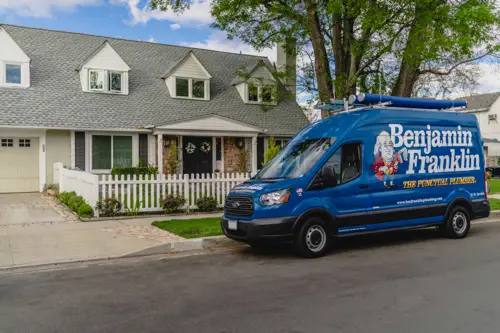
A side profile view of a blue Benjamin Franklin Plumbing van  with background removedHey there, Miami, FL, homeowner! Let’s talk about something not-so-fun but super important: your sewer line. You know, that unsung hero of your plumbing system that whisks away all the stuff you don’t want to think about? Well, when it decides to take a break (pun intended), things can get messy real quick. So, let’s dive into what happens when your sewer line breaks and how you can spot the trouble before it turns into a nightmare.
How to Identify the Symptoms of Sewer Line Breaks

Sewer line breaks aren’t always obvious. Sometimes, the signs can be subtle and easy to miss. If these early symptoms go unnoticed, they can cause bigger problems like structural damage, mold growth, and even health hazards. Below are the most common signs to watch for. These can cause major problems that affect the lifespan of sewer lines. Here are some signs to watch out for:

1. Pipe Erosion and Water Leaks

Picture this: your sewer line springs a leak, and suddenly water’s playing hide and seek in places it shouldn’t be. You might notice your yard turning into a mini swamp, or worse, cracks popping up on your driveway like unwanted acne. And heads up – where there’s water, there might be uninvited guests (hello, rodents!).

Pro tip: Keep an eye on your yard, especially after it rains cats and dogs. If something looks off, don’t wait – call in the pros at Benjamin Franklin!

2. Mold Growth in the Basement

Is your basement starting to smell like old gym socks? That musty odor could be mold throwing a party, thanks to a leaky sewer line. Mold’s not just gross – it’s bad news for your lungs too. If you spot damp patches or your basement walls are doing their best Jackson Pollock impression with water stains, it’s time to investigate.

Pro tip: Don’t play detective with mold. Get a plumber to check if your sewer line’s the culprit.

3. Sewer Gas Odors

If your home suddenly smells like a dozen rotten eggs had a wild night out, don’t blame it on Taco Tuesday. That lovely aroma could be sewer gas sneaking in through a broken line. It’s not just unpleasant – it can be dangerous too.

Pro tip: Trust your nose. If something smells off, it probably is. Time for a sewer line check-up!

How to Troubleshoot Your Sewer Line for Symptoms

Alright, Sherlock, ready to do some sleuthing? Here’s how you can play detective and find out if you are dealing with problems like sewer line breaks.

  • Go High-Tech: Ask a plumber for a camera inspection. It’s like giving your sewer line its own reality TV show – you’ll see exactly what’s going on down there.
  • Watch for Sinkholes: If your yard suddenly looks like the surface of the moon, something’s up (or rather, down).
  • Act Fast: Notice a problem? Don’t wait for it to fix itself (spoiler: it won’t). The sooner you tackle it, the less damage to your wallet.

Checklist of Symptoms of Sewer Line Breaks

To catch sewer line breaks early, keep an eye out for these common symptoms:

  • Slow draining in toilets, bathtubs, or showers.
  • Recurring clogs or backups, especially if the water looks muddy.
  • Bright green patches of grass during dry weather, which could mean water is leaking underground.
  • Cracks in your foundation or paved surfaces.
  • Rodents or insects in your home without an obvious source.
  • Mold or mildew in lower parts of your home, like the basement.
  • Foul odors, like sulfur or rotten eggs, inside or outside your home.

If you notice any of these signs, call a Benjamin Franklin plumber for an inspection as soon as possible.

Look, we get it. Sewer lines aren’t exactly dinner table conversation. But paying attention to these unsung heroes of your home can save you from a world of hurt (and a world of yuck). Keep an eye out for the warning signs, and don’t be shy about calling in the experts from Service Minds Ben Franklin if something seems off.

Remember, when it comes to sewer lines, an ounce of prevention is worth a pound of… well, you know. Stay vigilant, homeowners!

Filed Under: Blog

Choosing the Most Efficient Water Heaters

A blue Benjamin Franklin Plumbing van in front of a Miami FL homeChoosing the Most Efficient Water Heaters: Benjamin Franklin Plumbing Can Help

Choosing a new water heater for your home can be a challenging process. Determining the right size and configuration to suit your needs can ensure an adequate supply of hot water for you, your family and your guests.

An energy-efficient water heater can also save you money on your utility bills now and for many years into the future. Here are some helpful tips for finding the most energy-efficient water heater for your home.

What Kind of Water Heater Do You Need?

Tank water heaters offer reliable heating for large amounts of water. These appliances are available in electric, gas or combination models that can provide real flexibility for homeowners. Residential water heater tanks generally range in size from 30 to 75 gallons. Tank systems heat a large amount of water at once and must keep that water at the appropriate temperature until it is needed. As hot water is used, it is replaced with cold water that must be heated to the desired temperature.

Tankless water heaters are also known as on-demand water heating systems. Rather than maintaining water at a specific temperature for prolonged periods of time, however, tankless systems work by heating water as it is needed. Like tank systems, tankless water heaters can be configured to use gas or electricity as a power source. These systems are typically far more energy-efficient than comparable tank water heaters and can provide a virtually limitless supply of hot water for your home and your needs.

Some water heaters can operate on propane, natural gas or fuel oil. Newer models may use geothermal energy or solar energy to provide the power needed to heat water for your home. If these options are feasible for you and your family, they can often provide energy-efficient hot water to save you money on your utility bills.

Benefits and Drawbacks of Tank and Tankless Systems

Tank storage water heating systems are typically more affordable than comparable tankless systems. The overall cost of operation, however, is usually significantly higher because of the continual need to reheat water that has fallen below the desired temperature. Additionally, tank water heaters can deteriorate and leak over time. These systems can be bulky and are usually installed in an unfinished area to avoid issues if leaks do occur. If your tank water heater is more than 10 years old, you can usually lower your utility bills and enjoy greater peace of mind with a new, energy-efficient replacement system from a plumbing team you trust.

Tankless systems will usually cost less to operate than tank systems because they operate only when hot water is needed. This can reduce the amount of energy required to maintain a steady supply of hot water. The initial outlay for a tankless water heating system can be significantly higher than that for a traditional tank system. This can usually be offset, however, by the lower utility bills and always available hot water provided by these advanced systems. Tankless systems require less room for installation and typically need minimal maintenance to operate efficiently.

How to Choose Energy-efficient Water Heaters

The experts at the U.S. Department of Energy recommend choosing a water heater that uses an available energy source, that is sized correctly and that is as energy-efficient as possible within your budget range. In most cases, you can save on the cost of installation by choosing a replacement water heater that uses the same energy source as the one you replace. For instance, if your current water heater operates on natural gas, it can be less expensive to install a replacement that also uses natural gas.

For tankless systems, electrical and geothermal water heating systems are usually the most efficient. These systems can also run on natural gas or propane at a lower level of energy efficiency. Installing a tankless system can often reduce your carbon footprint along with lowering your utility costs, which can save you money while saving the environment in a practical way.

The Natural Resources Defense Council (NRDC) also recommends that homeowners consider heat pump water heating systems. These systems work much like the heat pumps that cool and heat homes and extract heat from outside area to create a reliable supply of hot water. Heat pump water heaters use high-efficiency compressors to heat water within a tank. The NRDC estimates that an average four-person household in the United States could save $550 a year by switching from a traditional tank water heater system to a heat pump water heater.

Comparing Water Heaters for Energy Efficiency

A few different factors are considered by ENERGY STAR and other ratings agencies when determining the overall energy efficiency of water heaters. The Uniform Energy Factor (UEF) is determined by separating water heaters into four categories based on size and then comparing their performance. The UEF is usually expressed as a decimal that represents the percentage of energy efficiency. For instance, a UEF of .95 offers 95 percent efficiency. Only five percent of the energy used is wasted.

The First Hour Rating is also used by ENERGY STAR when determining the energy efficiency of a tank water heater. This rating represents the volume of water that can be supplied within an hour from a fully heated storage water heater. Tankless systems use Maximum Gallons per Minute to provide an equivalent benchmark. ENERGY STAR is continually updating its requirements for certification. Water heaters that meet these standards typically feature an Energy Guide sticker that provides the estimated yearly energy cost associated with operating the water heater under normal conditions.

Reliable Plumbing Solutions From the Experts at Benjamin Franklin Plumbing

At Benjamin Franklin Plumbing, we offer reliable services for all your plumbing needs. We can help you choose the most energy-efficient and practical water heater for your home or business. Whether you are looking for a new tankless system to keep your utility bills lower or a replacement for your current tank system, we can provide recommendations and installations to help you enjoy dependable hot water and greater peace of mind. The dedicated and knowledgeable team members at Benjamin Franklin Plumbing are always here to help when you need us most.

Filed Under: Blog

What is the best temperature setting for my water heater?

Diego from Benjamin Franklin Plumbing in Miami, working under a sink in a kitchenWhen it comes to hot water for washing dishes, doing laundry and taking showers, your water heater plays a crucial role. Not only does it affect your comfort, but it also affects energy consumption, safety and the lifespan of your appliances. To keep hot water available, energy efficiency high and safety hazards low, it’s important to set the temperature correctly.

Impact on Appliances and Plumbing

Many of your plumbing and appliance systems are sensitive to the water heater’s temperature setting. Excessive heat from the water can wear out pipes and appliances faster than they should, which can lead to damage and expensive repairs sooner rather than later.

Mineral deposits can accumulate in pipes due to higher temperatures, which is particularly common in regions with hard water. Appliances might have their water flow restricted, their efficiency reduced and their lifespan shortened due to these deposits. In contrast, if you turn the thermostat down too low, your water heater will have to work harder to keep up with demand, which can be taxing on its components.

Energy Efficiency and Water Heater Temperature

The temperature of your water heater affects both its efficiency and the amount of money you spend on utilities. For maximum efficiency, the U.S. Department of Energy suggests a temperature of 120 degrees Fahrenheit, or 49 degrees Celsius. The water heater uses less energy and your monthly utility bills go down when the water is at this temperature.

Energy savings of three to five percent are possible for every 10-degree drop in temperature. Problems can arise, though, when the temperature is set too low; dangerous bacteria like Legionella can flourish in water that is just slightly warmer than bath water. Finding the sweet spot where efficiency meets safety is paramount. Getting an insulated water heater or setting it to operate only when needed will help you save even more money on energy bills if that’s your main concern.

Recommended Temperature for Water Heaters

Experts agree that water heaters work best when heated to a temperature of 120 degrees Fahrenheit. Hot water at this temperature is ideal for most home uses, and it also reduces the likelihood of burns and the spread of bacteria. Some homes may need to lower the temperature a bit because of things like the presence of elderly people or young children who are more prone to burns.

Setting the water heater to 140 degrees Fahrenheit is a good idea if you have a dishwasher that doesn’t preheat the water, a lot of people living in your house or someone with a compromised immune system. This temperature keeps bacteria and germs at bay, makes sure your dishwasher cleans and sanitizes dishes well and keeps the water hot even when there’s a lot of use. It is crucial to exercise caution, though, because water at this temperature can scald in under two seconds.

How to Adjust Water Heater Temperature

It won’t take you more than a few minutes to change the temperature setting on your water heater. For safety reasons, you should turn off the power to the heater before making any adjustments. A thermostat dial located close to the heater’s base is standard on most contemporary models. You might be able to access the thermostat for your gas water heater through a panel on the front of the device.

In electric models, you’ll typically find two thermostats, one behind a screw-off panel for the upper element and another for the lower heating element. When you find it, turn the dial to adjust the temperature. Allow the water heater some time to adjust to the new setting by making small adjustments at first.

Using a water thermometer at the faucet is a smart way to make sure the water is at the right temperature. A skilled plumber can guide you through this process if you’re confused about what to do.

Factors Affecting the Best Temperature Setting

The best temperature for your home’s water heater depends on a number of things. One of the main things to think about is the weather. A slightly higher temperature might be necessary in colder areas to make up for heat loss while it travels through the pipes. A higher setting may also work better for larger households to guarantee that there is adequate hot water for multiple activities, such as running the dishwasher and taking a shower at the same time.

Considerations of health and safety may influence your choice. Another consideration is the hardness of the water supply; in houses with exceptionally hard water, mineral deposits can accumulate more quickly when the temperature is higher. To keep your water heater running smoothly and safely, it’s important to do routine maintenance and make modifications according to these parameters.

Preventing Scalding Risks

To further lessen the likelihood of burns, some water heaters have a tempering valve or anti-scald technology that mixes cold and hot water before it reaches the faucet. It might be prudent to install these security measures for residences that house especially vulnerable people. Checking the water temperature at the faucets on a regular basis, particularly after making modifications, might help you detect any irregularities and avoid possible harm.

Maintaining Consistent Water Temperature

The water temperature will stay consistent as it flows through your plumbing system if you insulate your water heater and the pipes that go out of it. Another way to keep your water heater in good working order and ensure a consistent temperature is to flush the tank regularly to remove sediment buildup. Make sure to check the thermostat every so often; it’s easy to accidentally change the settings or for them to lose some of their accuracy over time.

If you need your water heater serviced, call Benjamin Franklin Plumbing. Our highly skilled technicians will quickly diagnose the problem and fix it so that your system runs at peak efficiency. We can also help with temperature settings and thermostat calibration.

Filed Under: Blog

PEX vs. Copper Piping: Which Should You Install?

James from Benjamin Franklin Plumbing in front of his van in Miami, FLIf you’re installing new plumbing in your home, you may be looking at copper and PEX pipes and wondering which material is the best for your needs. Each option has different qualities that make them worth considering. Copper pipes have been around for centuries.

They are known to be durable, reliable, and resistant to high temperatures. PEX pipes, which have been used for plumbing since the 1990s, are made from a corrosion-resistant flexible plastic material that can typically withstand freezing weather. Both choices can reliably bring fresh water into your house for years at a time, but you’ll want to consider their differences before deciding which pipes to install.

Installation

When you’re choosing a piping material, you’ll want to consider how installation can affect your plumbing project.

PEX piping consists of flexible tubing that can bend around obstacles and be connected with push-fit or compression fittings that eliminate the need for soldering. This makes it faster and easier to install in tight spaces and reduces the number of fittings needed to complete the setup. PEX piping resists scale buildup and corrosion, but UV rays, chemical contamination, and rodents can damage it, which makes this material unsuitable for outdoor use.

Copper pipes are straight metal alloy tubes that must be cut to fit and soldered together. They can stand up to high pressures and temperatures for many years, but can also become susceptible to scale buildup and corrosion as time goes by. Copper is resistant to UV rays and rodents. It’s suited to outdoor use, but its rigidity can make it difficult to install.

Cost

New plumbing is an investment in your quality of life, so it’s important to consider the cost of materials and installation to get the most value for your money.

PEX piping tends to cost less overall because it has a lower cost, typically ranging between $0.30 and $12.00 per linear foot depending on its diameter. It’s also fast and easy to install.

Copper piping tends to be expensive up front, generally ranging from about $1.35 to $117.75 per linear foot. It also requires more time and technical expertise to install.

Lifespan

The longevity of your plumbing system can impact its long-term operating costs and your home’s resale value.

PEX pipes tend to last 25 to 40 years with proper care and maintenance. A qualified plumber can advise you on how to optimize its performance and maximize its longevity.

Copper piping can last over 50 to 70 years or longer when it’s properly installed and maintained, but it can also be susceptible to corrosion, scale buildup, and leaks over time. Hiring a plumber to inspect your pipes from time to time and fix any damage can keep your plumbing running smoothly and enhance the value of your home.

Accessibility

Because PEX piping systems are more modern, they tend to be designed in a manner that makes them more accessible and easier to manage.

PEX pipe systems include a water distribution manifold that has individual valves that serve different areas of your house instead of a central supply valve. Copper piping has one main supply valve that supplies water to the entire house. It may also be less accessible if it is installed behind drywall.

Maintenance and Care

Maintaining your plumbing system can potentially be costly and time-consuming, so your tolerance for upkeep may influence your purchasing decision.

With proper installation and care, PEX piping is low maintenance. To safeguard its resilience and prevent UV damage, plumbers should position it out of the way of direct sunlight or bury it below ground. It’s also important to keep PEX piping away from chemicals like chlorine and solvents that can cause the material to degrade and crack. Most residential PEX plumbing pipes are rated to withstand temperatures of 180°F at pressures of 100 psi.

Copper piping needs regular maintenance to perform well over its lifetime. Homeowners should periodically check for signs of leaking, scale buildup, and corrosion and protect pipes against freezing temperatures. They should also keep the pipes away from acids and other harsh chemicals. Otherwise, copper pipes have the advantage of being UV resistant, so they are fine for use outdoors.

Resale Value

The piping material you install in your home can impact your home’s resale value. Because copper has a good reputation for durability, reliability, and longevity, many buyers prefer homes with copper pipes. On the other hand, PEX pipes are a modern alternative that can reduce energy and maintenance costs, which many buyers consider to be an advantage. Overall, the age and condition of the piping system and the tastes of the market in a particular location will affect its impact on a home’s resale price.

Sustainability

Many homeowners today who are concerned about reducing their environmental impact and lowering their energy costs are looking to install more sustainable plumbing systems.

Manufacturing and Production Impacts

Although PEX piping is made from plastic, it is considered to be relatively sustainable because it requires less energy to manufacture than copper. Since polyethylene, the main component in PEX piping, is a byproduct of the process used to refine oil or natural gas for fuel, manufacturing PEX does not require direct extraction of raw materials from the earth.

Copper piping is energy-intensive to produce, so its production has a greater impact on global warming. Its raw materials (copper ores) are generally strip-mined from the earth, which destroys natural habitats and produces huge amounts of pollution and waste.

Water and Energy Use

Because copper conducts heat, copper piping wastes more energy than non-conductive PEX pipes as water travels through them. People who have copper pipes may also waste more water and energy overall if the water in their system takes longer to heat up.

Recyclability

Copper pipes can easily be melted down and recycled to create new pipes. PEX tubes can’t be melted for reuse as piping, but they can be ground up and used to create composite lumber and other construction products.

Which Piping Material Is Best For You?

Choosing the right piping material for your home is a matter of weighing each type’s pros and cons against your specific needs. Deciding between PEX and copper piping usually depends on where you live, how long you want your pipes to last, and what you can afford. The professionals at Miami Benjamin Franklin Plumbing can give you advice about how installing copper or PEX pipes could benefit you, so you can choose the system that provides the best performance and value overall. If you’re noticing signs that your home needs new piping, they can help guide you through the process.

Filed Under: Blog

  • « Previous Page
  • 1
  • …
  • 3
  • 4
  • 5
  • 6
  • Next Page »

How can we help you?

Your Name(Required)
Consent(Required)
By submitting your information, you agree to allow Benjamin Franklin Plumbing to contact you via phone, email, or text regarding your project inquiries. Rest assured, your personal information will remain confidential and will not be shared with third parties for marketing or spam. You can opt out whenever you wish. Standard message/data rates may apply. Consent is not a condition of purchase.
Terms and Conditions | Privacy Policy

Our Location

Benjamin Franklin Plumbing® of Miami
12155 SW 114th Place Bay 22
Miami, FL 33176

Phone: (305) 697-7393

Hours of Operation:

Monday: 24 Hours
Tuesday: 24 Hours
Wednesday: 24 Hours
Thursday: 24 Hours
Friday: 24 Hours
Saturday: 24 Hours
Sunday: 24 Hours

Connect with Us

Facebook Youtube

Our Services

Drain Clearing
Drain Unclogging
Drain Cleaning
Emergency Plumbing
Faucet Installation
Faucet Repair
Garbage Disposals
Garbage Disposal Repair
House Repiping
Hydro-Jetting
Leak Detection
Plumbing Repairs
Sewer Line Repair
Sewer Line Replacement
Shower Installation
Shower Repair
Sump Pumps
Tankless Water Heaters
Toilet Installation
Toilet Repair
Water Filtration
Water Heater Installation
Water Heater Repair
Water Line Repair
Water Line Replacement
Water Softeners
Well Pump Repair

About

Our Company
Contact Us

Copyright © 2026 · Service Minds | License: | Privacy Policy • Terms and Conditions

Book Online
(305) 697-7393